
Loading...
Serving Tewksbury, MA and surrounding areas. (978) 230-0352
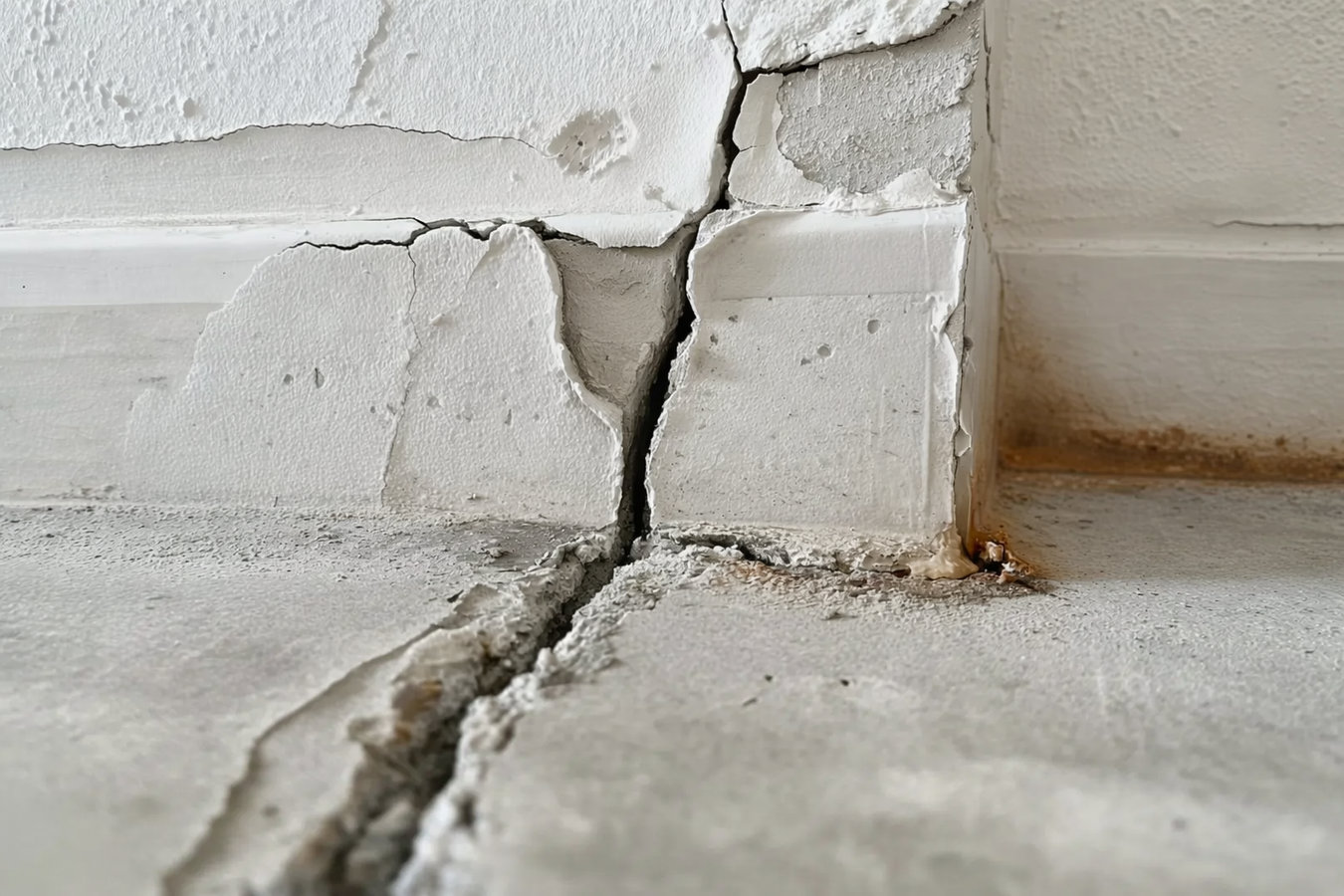
A sunken slab or settling floor gets worse with every winter. We lift and stabilize your foundation so you stop watching the problem grow.
Foundation raising in Tewksbury lifts a sunken or uneven concrete slab back to its original level position by filling the voids underneath it - most residential jobs are completed in one to two days with minimal disruption to your home.
If you have noticed a sloping garage floor, a basement slab that dips in the corner, or doors that started sticking after last winter, those are signs your foundation has shifted. Tewksbury experiences a full New England freeze-thaw cycle every year, and that repeated ground movement is the most common reason foundations settle in this area. The good news is that raising an existing slab is almost always less expensive than tearing it out and starting over. If you also have outdoor concrete that has heaved or settled, our slab foundation building service covers new work alongside repairs.
When a foundation shifts, door frames and window frames shift with it. If a door that used to swing freely now drags or sticks, your home is telling you something has moved. In Tewksbury, this symptom often appears in spring right after the ground thaws and settles into a new position.
Walk along the base of your interior walls and look for a gap between the floor and the baseboard. A gap that has grown wider over the past year is a sign the slab has dropped in that area. This is especially common in Tewksbury homes built in the 1960s and 1970s, where original soil prep under the slab was often minimal.
Small hairline cracks in concrete are normal. But cracks that are wider than a pencil, run diagonally, or have one side higher than the other are signs of active settlement. Run your foot across the crack - if you can feel a step up or down, the slab has moved and needs attention.
Water collecting against your foundation wall after a rainstorm means the ground has settled in a way that directs drainage toward your home. In Tewksbury, this is especially common after the March and April snowmelt season, when saturated soil shifts and drainage patterns change.
We handle foundation raising for garage slabs, basement floors, exterior concrete, and full perimeter foundations on residential properties throughout Tewksbury. The work involves drilling small holes through the concrete, pumping material underneath to fill voids and lift the slab back to level, then patching those holes flush before we leave. We use both traditional mudjacking and foam-lifting methods depending on what your specific situation calls for - and we explain the difference before any work begins. For homes that also need structural work around the foundation, our concrete cutting service can open walls or floors as part of a larger repair scope.
Every job starts with an in-person assessment so we understand how much the foundation has moved, what caused it, and whether raising is the right fix or whether something else is needed. We handle the permit process with the Tewksbury Building Department when permits are required, and we do not start work until you have a written estimate you have approved.
Best for homeowners whose garage floor has developed a noticeable dip, slope, or crack that has worsened after recent winters.
Suited to basement slabs that have settled unevenly, creating low spots, floor gaps, or drainage issues inside the home.
For front stoops, side entries, or perimeter slabs that have dropped away from the house and created gaps or trip hazards.
For homes where multiple foundation sections have settled and a comprehensive repair is more practical than addressing each spot separately.
Tewksbury sits in Middlesex County and experiences a full New England winter, with temperatures regularly dropping below freezing from December through March. Every time the ground freezes and thaws, the soil underneath your foundation expands and contracts - and over years, that repeated movement pushes slabs out of position. A significant portion of Tewksbury's residential neighborhoods were developed from the 1950s through the 1980s, when soil compaction standards were less rigorous than they are today. Homes built in that era are now 40 to 70 years old, which is exactly when foundation settlement becomes most noticeable. Much of Tewksbury also sits on glacial soils - a mix of sandy loam, gravel, and clay that behaves differently depending on where you are on your own lot. Clay-heavy pockets hold water, swell when wet, then shrink when dry, creating ongoing movement under slabs. Sandy areas drain quickly but can wash out under heavy rain, leaving voids that cause sudden settling.
We work throughout Tewksbury and the surrounding communities. Homeowners in Billerica, MA and Wilmington, MA face the same freeze-thaw and glacial soil conditions, and we bring the same approach to every job - an honest assessment, a clear explanation of the options, and work that addresses the underlying cause rather than just the visible symptom.
When you call, we ask a few basic questions - what you're noticing, where it is in the home, and how long it has been happening. We reply within one business day and schedule an on-site visit, usually within a week or two. There is no charge for this first visit.
We walk the affected area with you, look at the slab, surrounding soil, and any visible cracks or gaps. We explain what we find in plain language and give you a written estimate that covers what we plan to do and why - before you commit to anything.
For structural foundation work in Massachusetts, a building permit is typically required. We handle pulling the permit from the Tewksbury Building Department - that is our job, not yours. Once the permit is in hand, we schedule your work date.
The crew drills small holes, pumps material underneath to fill voids and raise the slab, and patches the holes flush before leaving. Most residential jobs wrap up in a few hours to one full day. We walk through the results with you before we pack up.
Free estimate, no obligation. We handle permits and explain everything before work begins.
(978) 230-0352Raising a slab without fixing the drainage or compaction problem underneath it means the slab will settle again. We look at what caused the movement and recommend drainage or soil improvements alongside the lifting work. That is how repairs last.
Massachusetts requires permits for structural foundation work, and some contractors skip that step to save time - leaving you exposed if you ever sell or file an insurance claim. We pull the permit from the Tewksbury Building Department on your behalf, so your repair is on record and your home's history is clean.
You get a written quote after an in-person inspection, not a ballpark number over the phone. We do not start work until you have approved the scope and the price. The number you agree to is the number you pay.
Foundation raising works when the concrete is structurally sound but has simply settled. If your slab is cracked through or the underlying soil problem is severe, we will tell you that honestly and explain your options. The{' '}National Foundation Repair Association sets standards for this type of work that we follow.
Every foundation raising job we take on starts with an honest conversation about what is actually causing the problem. That approach means fewer callbacks, longer-lasting results, and homeowners who know exactly what they paid for and why.
Precise concrete cutting for openings, trenches, and drainage projects on residential properties.
Learn MoreNew and replacement slab foundations for additions, garages, and outbuildings throughout Tewksbury.
Learn MoreEvery freeze-thaw cycle pushes it further. Call Premier Tewksbury Concrete today for a free on-site estimate and get a clear answer before next winter.